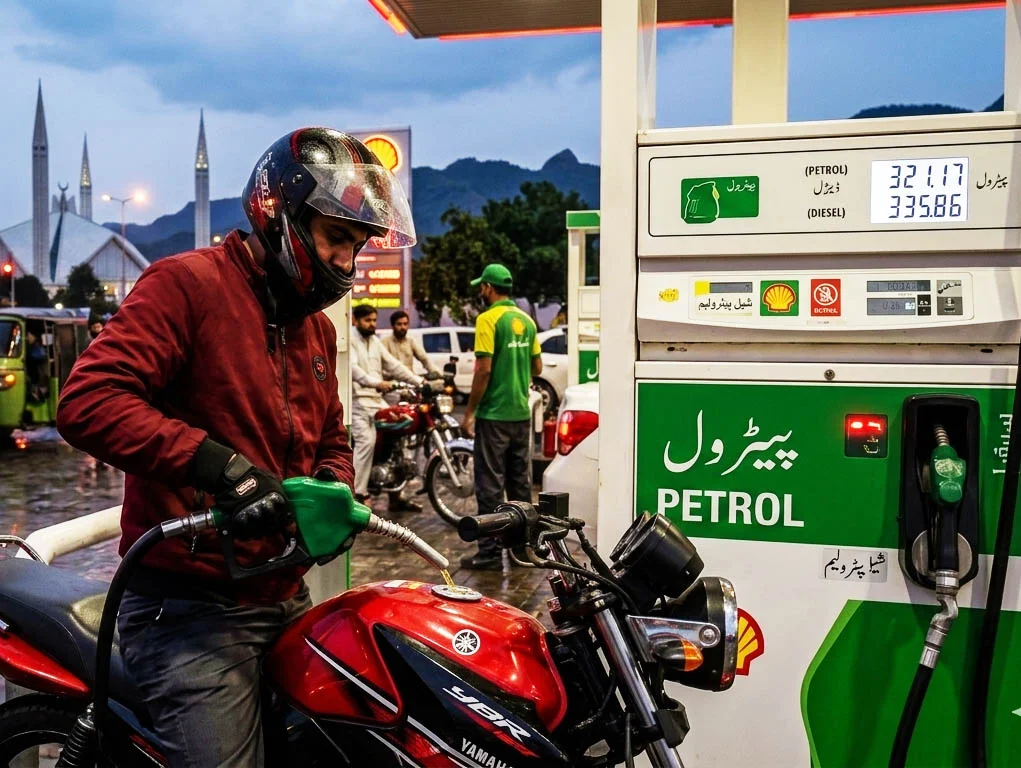
The government of Pakistan has dropped a significant “petrol bomb” on the nation, announcing a record-breaking increase in the prices of petroleum products effective from March 7, 2026. This sudden move comes at a time when global energy markets are reeling from escalating tensions in the Middle East and the closure of the strategic Strait of Hormuz.
In this article, we provide a comprehensive breakdown of the new petrol and diesel prices, the reasons behind this historic hike, and the potential impact on the Pakistani economy.
New Petrol and Diesel Prices in Pakistan (March 2026)
Following a late-night press conference held by Petroleum Minister Ali Pervaiz Malik, alongside Deputy Prime Minister Ishaq Dar and Finance Minister Muhammad Aurangzeb, the new rates have been implemented immediately.
The table below reflects the updated ex-depot prices:
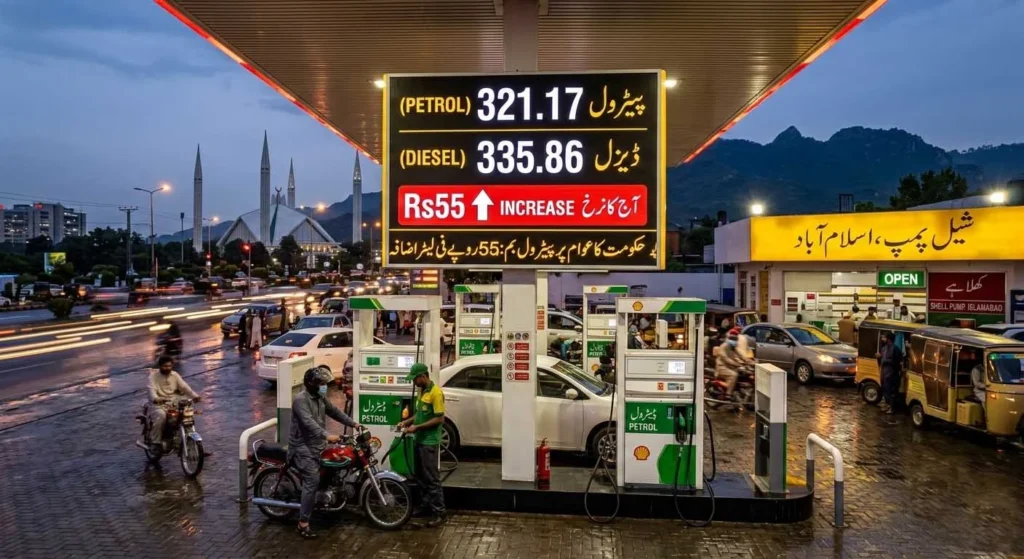
| Product | Old Price (PKR) | New Price (PKR) | Increase (PKR) |
| Petrol (Motor Spirit) | Rs266.17 | Rs321.17 | Rs55.00 |
| High-Speed Diesel (HSD) | Rs280.86 | Rs335.86 | Rs55.00 |
This adjustment marks a nearly 17% to 20% surge in a single notification, making it one of the steepest hikes in the country’s history.
Why is Petrol Price in Pakistan Increasing Today?
The decision to raise fuel prices was not taken in isolation. Several geopolitical and economic factors have converged to force the government’s hand:
1. Middle East Conflict and Supply Chain Disruptions
The primary driver for the hike is the widening conflict in West Asia. Following military strikes involving the United States, Israel, and Iran, the Strait of Hormuz—a vital maritime route for 20% of the world’s oil—has seen significant disruptions. This has caused international crude oil prices to surge by over 50% in the last week alone.
2. Shift to Weekly Price Reviews
In a major policy shift, the federal government has announced that petroleum prices will now be reviewed on a weekly basis instead of fortnightly. This change is intended to keep the domestic market liquid and responsive to the highly volatile international oil prices.
3. IMF Conditions and Petroleum Levy
Sources indicate that the International Monetary Fund (IMF) has urged Pakistan to maintain fiscal discipline by adjusting fuel prices in line with global trends. As part of this, the government has increased the Petroleum Development Levy (PDL) on petrol to a record Rs105.4 per litre, though they slightly reduced the levy on diesel to mitigate the impact on the transport sector.
4. Currency Devaluation and Import Costs
As a country heavily dependent on energy imports, any fluctuation in the global market or the value of the PKR directly impacts the landing cost of oil. With Brent crude hovering near the $100 mark, the cost of procurement has become unsustainable without a price pass-through.
Impact on the Public and Economy
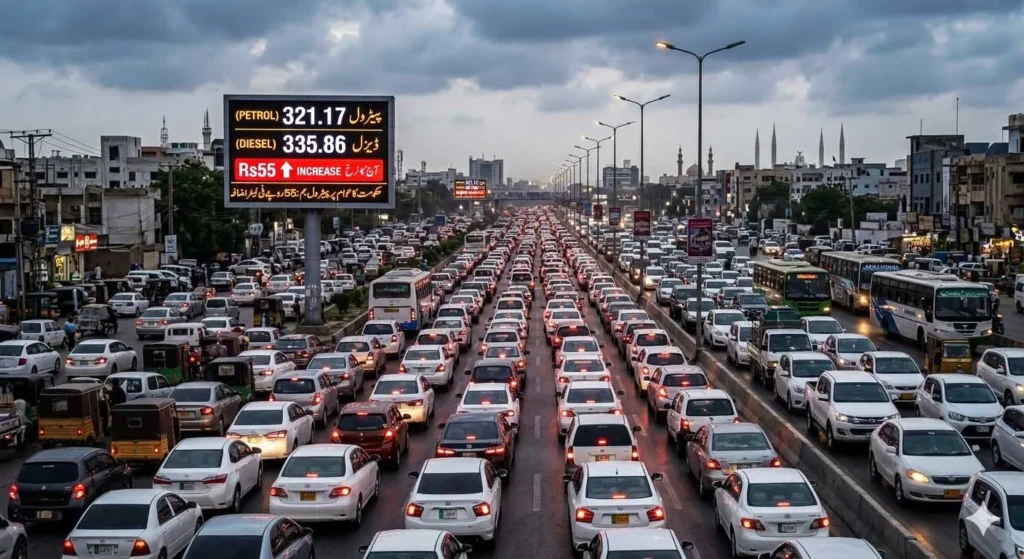
The massive hike of Rs55 per litre is expected to have a “trickle-down” effect on almost every sector of the economy:
- Inflation Surge: High-speed diesel is primarily used in heavy transport and agriculture. An increase in diesel prices leads to higher freight charges, which in turn increases the prices of essential commodities like milk, vegetables, and grains.
- Public Transport: Commuters in major cities like Karachi, Lahore, and Islamabad are likely to face increased fares for buses, rickshaws, and ride-hailing services.
- Industrial Costs: Industries relying on diesel generators for power will see a significant rise in production costs, potentially making Pakistani exports less competitive.
Government Measures for Fuel Conservation
To cope with the potential energy shortage and the rising cost of imports, the government is considering several emergency measures:
- Implementing work-from-home policies for certain sectors.
- Encouraging distance learning for educational institutions.
- Strict monitoring of fuel stocks to prevent hoarding and artificial shortages.
Petroleum Minister Ali Pervaiz Malik assured the public that the country currently holds “comfortable” reserves and that the government would “swiftly revise down prices” as soon as international market conditions stabilize.
Frequently Asked Questions (FAQs)
What is the current price of petrol in Pakistan today?
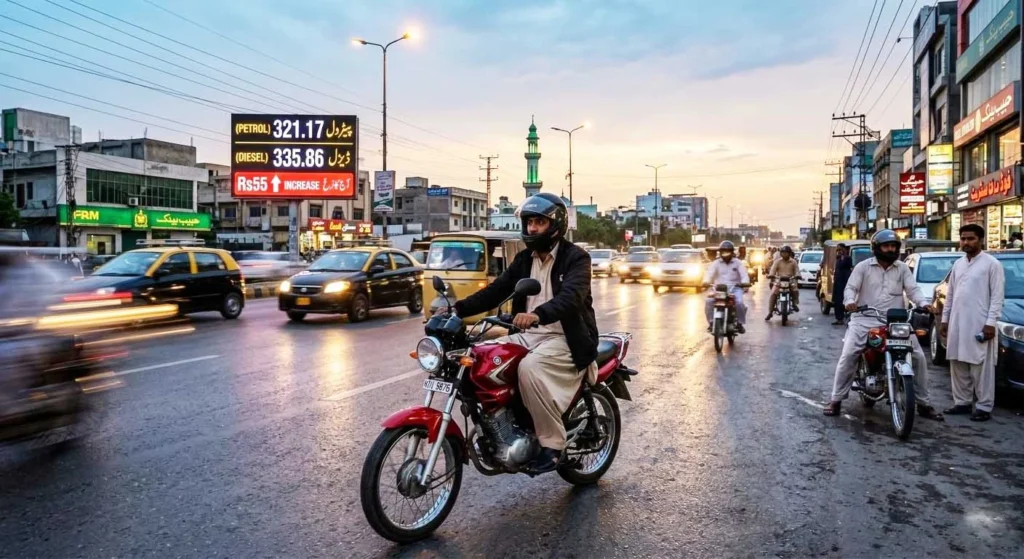
As of March 7, 2026, the price of petrol in Pakistan is Rs321.17 per litre after a massive hike of Rs55.
What is the new diesel price in Pakistan?
The price of High-Speed Diesel (HSD) has been increased to Rs335.86 per litre.
Why did the government increase the price by Rs55?
The increase is due to the surge in global crude oil prices caused by the Middle East conflict and the closure of the Strait of Hormuz, along with IMF requirements to adjust the petroleum levy.
Will there be another petrol price hike soon?
The government has moved to a weekly review system. If international oil prices continue to rise due to regional instability, further adjustments may be announced by next weekend.
Are there any fuel shortages in Pakistan?
The government maintains that there are sufficient petroleum stocks in the country. However, long queues were reported at various petrol pumps due to panic buying before the price hike took effect.