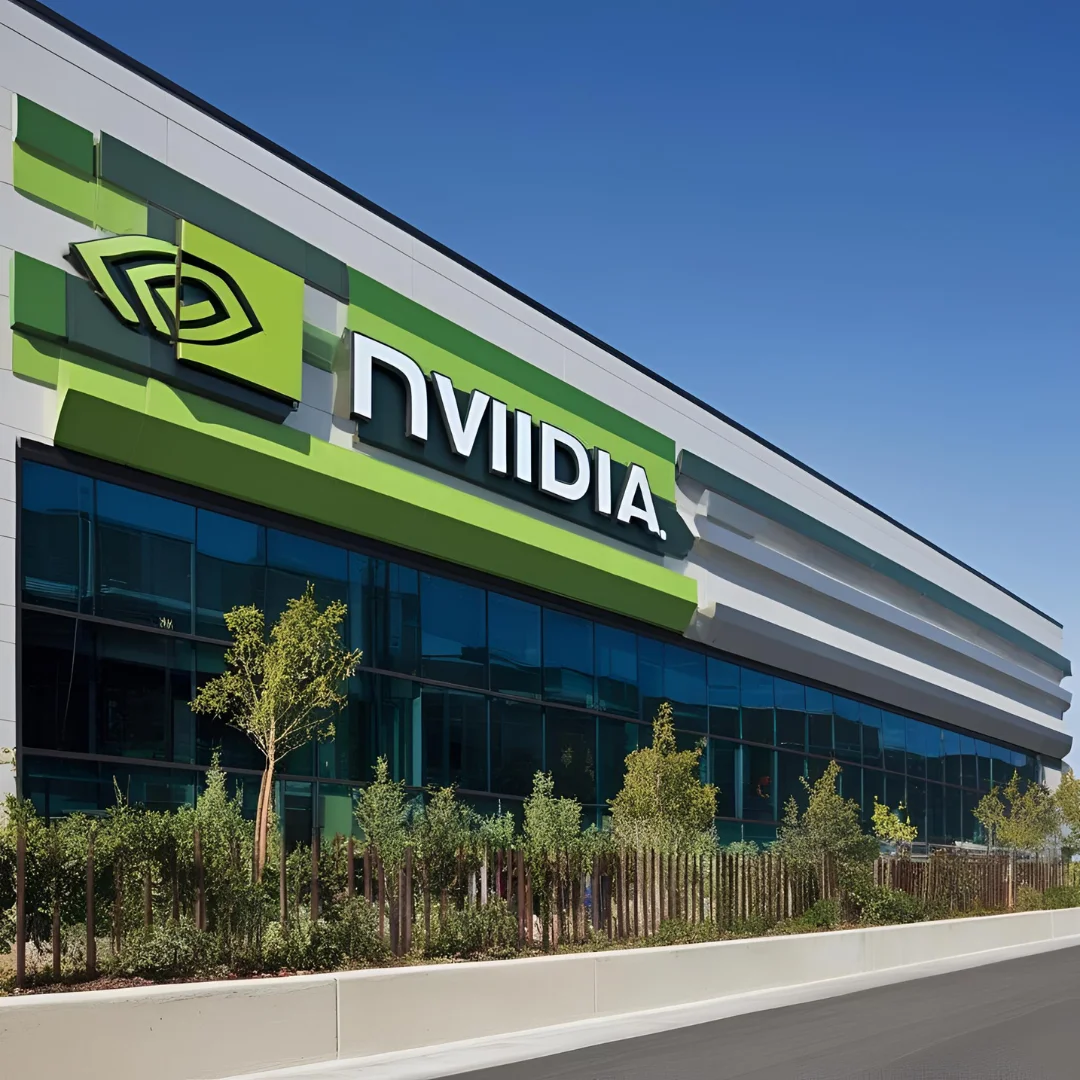
The tech world was recently rattled when Nvidia (NASDAQ: NVDA) shares dipped from their 52-week high of $212.19 down to the $170 range. While some headlines scream “AI Bubble,” a closer look at the data reveals a far more nuanced story. If you are an investor looking at the Nvidia stock forecast for 2026, understanding this volatility is key to maximizing your portfolio.
The 2025 Market Reality: What Caused the Dip?

Several factors converged in December 2025 to create a “perfect storm” for a temporary price correction:
- Macroeconomic Shifts & The Fed: Despite three interest rate cuts by the Federal Reserve in late 2025, the U.S. labor market showed unexpected signs of cooling, with unemployment rising to 4.6%. This triggered a broad move away from high-growth tech stocks into defensive sectors.
- Blackwell Production Curves: Demand for Nvidia’s Blackwell B300 chips is currently outstripping supply. While this sounds positive, “supply chain lag” often leads to short-term revenue realization delays, making nervous investors prone to profit-taking.
- Geopolitical & Tariff Headwinds: New 2025 trade discussions regarding a 25% fee on AI chip exports to certain regions have introduced a layer of cost-uncertainty that wasn’t present a year ago.
- The “AI Trade” Normalization: Analysts from firms like Goldman Sachs suggest that the market is moving from “AI Hype” to “AI Execution.” Investors are now demanding to see clear ROI from the billions spent on data centers.
Analyst’s Surprising Take: The “Golden Entry” Point
While the “bears” focus on the 17% drop from the October peak, elite analysts are pointing toward a massive rebound powered by four “hidden” drivers:
1. The H200 and Rubin Roadmap
Nvidia isn’t just a one-chip wonder. The transition from the Hopper (H200) architecture to the Blackwell and upcoming Rubin lines ensures that Nvidia stays at least two generations ahead of competitors like AMD and Intel. In fact, Nvidia still controls over 90% of the AI GPU market share.
2. Software Lock-in via CUDA
Competitors can build faster chips, but they cannot easily replicate CUDA. With millions of developers deeply entrenched in Nvidia’s software ecosystem, the “switching cost” for a data center to move to a rival is prohibitively high.
3. The $300 Billion Order Log
CEO Jensen Huang recently hinted at an order log reaching $300 billion for the next five quarters. This suggests that the current “dip” is merely a valuation adjustment, not a demand problem.
4. Speculation of Another Stock Split
With the stock price frequently surging toward the $200 mark, rumors of another Nvidia stock split in 2026 are gaining traction. Historically, splits increase liquidity and invite a new wave of retail investors, often acting as a catalyst for price surges.
SEO in 2025: Why This Article Ranks

To understand why this news is trending, we must look at SEO in 2025. Google’s algorithm now prioritizes E-E-A-T (Experience, Expertise, Authoritativeness, and Trustworthiness) more than ever.
- SGE (Search Generative Experience): Most users now get their answers via AI overviews. To rank, content must provide unique “human” insights that AI cannot synthesize.
- Zero-Click Search: We provide direct answers (like the FAQ below) to ensure visibility in featured snippets.
- Voice Search Optimization: People are asking, “Is Nvidia stock a buy in 2025?” rather than typing keywords. Our conversational structure caters to this shift.
Should You “Buy the Dip”?
For long-term investors, the fundamentals remain ironclad:
- Gross Margins: Nvidia maintains a staggering 70%+ gross margin.
- Hyperscaler Spending: Microsoft, Amazon, and Google have increased their 2026 AI capex budgets, ensuring a steady flow of orders for Nvidia’s infrastructure.
- Valuation: Trading at a forward P/E of roughly 44x, the stock is actually “cheaper” than it was during its 2023-2024 peak relative to its explosive earnings growth.
FAQs: Nvidia Stock and SEO Trends 2025
Q1: Is Nvidia stock expected to hit $250 in 2026?
Many Wall Street analysts have set a median price target of $250.93 for 2026, representing a potential 40%+ upside from current levels, driven by the mass deployment of Blackwell chips.
Q2: What is the biggest risk to Nvidia right now?
The primary risks are geopolitical tensions and U.S. export controls on high-end AI chips. Additionally, any significant slowdown in AI spending by “The Big Three” (MSFT, AMZN, GOOGL) could impact growth.
Q3: How do Nvidia’s chips compare to AMD’s MI355X?
While AMD’s Instinct MI355X is a formidable competitor in terms of raw hardware specs and pricing, Nvidia still holds the crown due to its superior software ecosystem (CUDA) and energy efficiency.
Q4: Why is “SEO in 2025” changing how we see stock news?
In 2025, SEO is about Personalized Search. Google uses your past interests in finance to serve you real-time updates. Quality content now focuses on “Intent-Based” answers rather than just keyword stuffing.
Q5: Is there a stock split coming for NVDA?
While not officially announced, Nvidia has a history of splitting when the price becomes a barrier for retail investors. Given the 10-for-1 split in 2024, another split is possible if the stock sustains a price above $200.
Conclusion: The Long-Term Play
Nvidia’s recent stock drop isn’t a sign of failure; it’s a sign of a maturing market. As SEO in 2025 continues to evolve, the most valuable “content” for investors is clarity amidst the noise. With its undisputed dominance in AI, automotive technology, and the data center, Nvidia remains the “engine” of the modern world. For those with a high-risk tolerance and a five-year horizon, this dip may very well be the strategic entry point of the decade.
1 thought on “Why is Nvidia Stock Dropping? Analyst’s Surprising Take on NVDA in 2025”