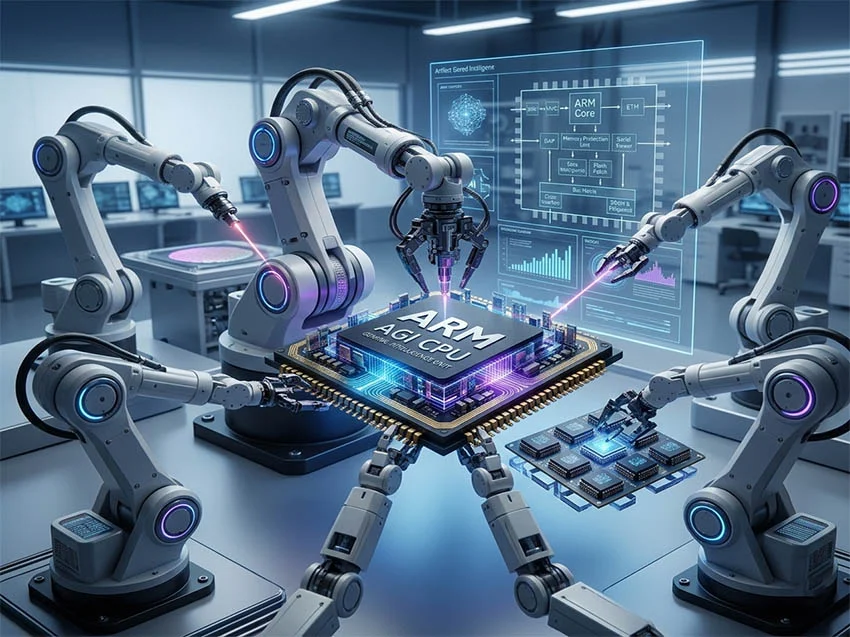
The global tech industry is witnessing a major turning point. In a historic first, Arm Holdings has officially stepped beyond its traditional role of designing chip architectures and entered the world of production silicon. This bold move signals a massive shift in how AI infrastructure will be built and scaled in the coming years.
With the launch of the Arm AGI CPU, the company is not just evolving—it’s redefining the future of computing for AI-driven data centers. As artificial intelligence continues to expand rapidly across industries, Arm’s decision could reshape the competitive landscape dominated by traditional chipmakers.
What Makes This Announcement So Important?
For decades, Arm has been the backbone of billions of devices—from smartphones to IoT systems—by licensing its chip designs. But now, for the first time, Arm is building its own physical silicon chips.
This move places Arm in direct competition with companies that previously relied on its technology, such as Intel and AMD.
Key Highlights of the Announcement:
- Introduction of Arm AGI CPU, designed specifically for AI data centers
- Expansion from IP licensing to full silicon production
- Focus on powering agentic AI workloads
- Strong partnerships with major tech players like Meta and NVIDIA
This marks a strategic pivot that could unlock new opportunities for innovation, scalability, and efficiency.
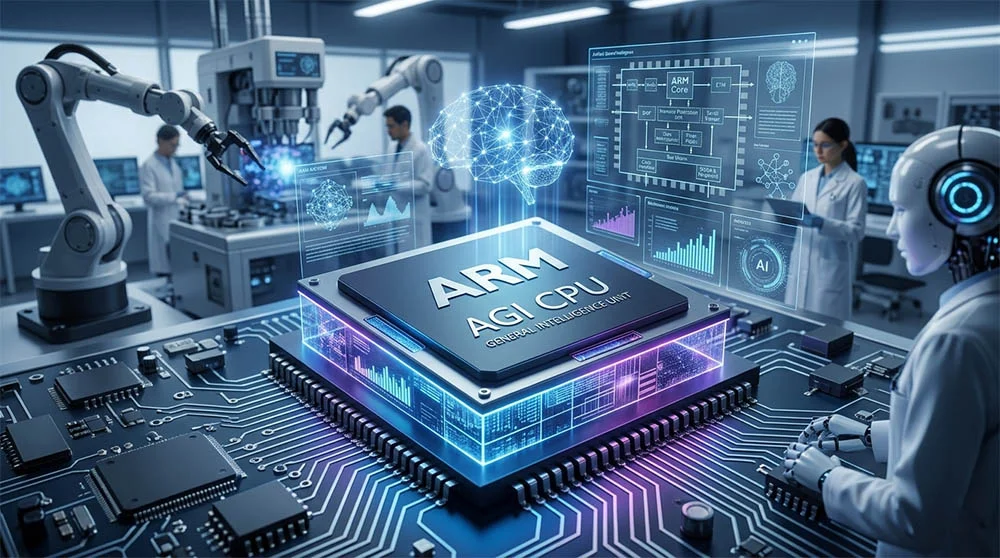
Understanding the Rise of Agentic AI
To understand why this matters, you need to look at the rise of agentic AI—a new generation of AI systems that don’t just respond but think, plan, and act independently.
Unlike traditional AI models that process tasks in isolation, agentic AI systems:
- Continuously run and make decisions
- Generate massive volumes of data (tokens)
- Require constant coordination between systems
This shift is creating unprecedented demand for CPUs, especially in AI data centers.
Why AI Data Centers Need a New Kind of CPU
Modern AI workloads are no longer just about training models—they’re about running them continuously at scale. This creates new challenges:
🔹 Growing Demand for Compute Power
AI agents generate huge workloads that require:
- Faster processing speeds
- Higher memory bandwidth
- Low latency performance
🔹 Power Efficiency Matters More Than Ever
Data centers must handle increasing workloads without dramatically increasing power consumption.
🔹 Limitations of Traditional x86 Architecture
Legacy processors often struggle with:
- High power consumption
- Complex architecture
- Inefficient scaling for AI tasks
This is where Arm’s new CPU aims to change the game.
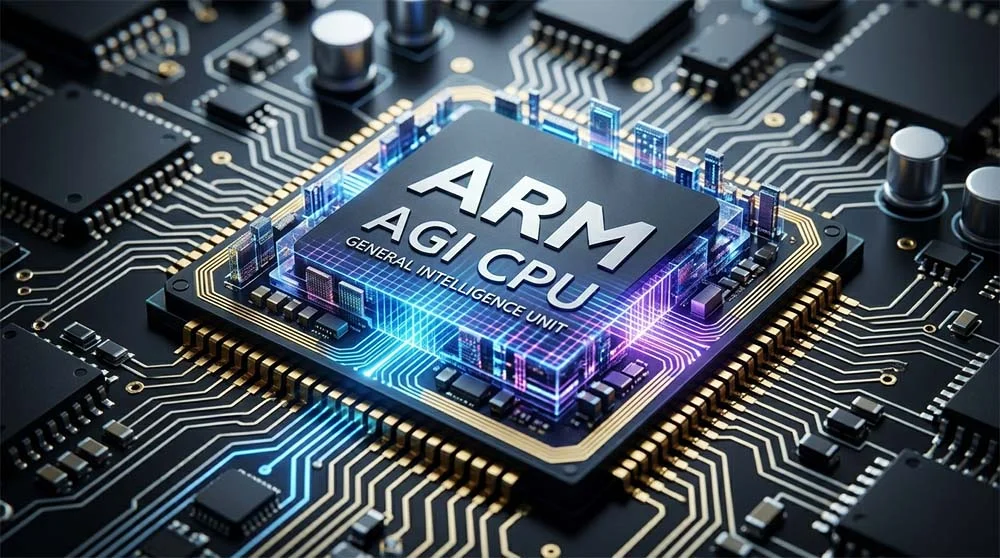
Arm AGI CPU: A Game-Changer for AI Infrastructure
The newly introduced Arm AGI CPU is designed from the ground up to handle the demands of AI-scale computing.
🚀 Performance That Stands Out
- Up to 136 Arm Neoverse V3 cores per CPU
- High memory bandwidth per core
- Ultra-low latency performance
⚡ Massive Scalability
- Supports thousands of cores per rack
- Optimized for both air-cooled and liquid-cooled systems
- Designed for consistent performance without throttling
🌱 Energy Efficiency
- Operates within realistic power limits
- Delivers more compute per watt compared to traditional CPUs
💰 Cost Benefits
- Up to 2x performance per rack vs x86 CPUs
- Potential savings of billions in data center costs
These features make the AGI CPU ideal for handling complex AI workloads efficiently.
Meta Leads the Way: Strategic Partnership
One of the most significant aspects of this launch is the collaboration with Meta.
Meta is not just a partner—it is a co-developer of the Arm AGI CPU. The company plans to integrate it with its own AI hardware, including the Meta Training and Inference Accelerator (MTIA).
Why This Matters:
- Enhances AI performance across Meta’s platforms
- Improves infrastructure efficiency at scale
- Supports long-term AI development strategies
This partnership signals strong confidence in Arm’s new direction.
Industry-Wide Support: A Powerful Ecosystem
Arm’s move is backed by a massive ecosystem of global tech leaders. Companies like:
- Microsoft
- Samsung
- TSMC
are actively supporting or collaborating on this new platform.
What This Means for the Industry:
- Faster innovation in AI infrastructure
- Increased competition in the chip market
- Greater flexibility for cloud providers and enterprises
This level of support indicates that Arm’s strategy is not just experimental—it’s industry-defining.
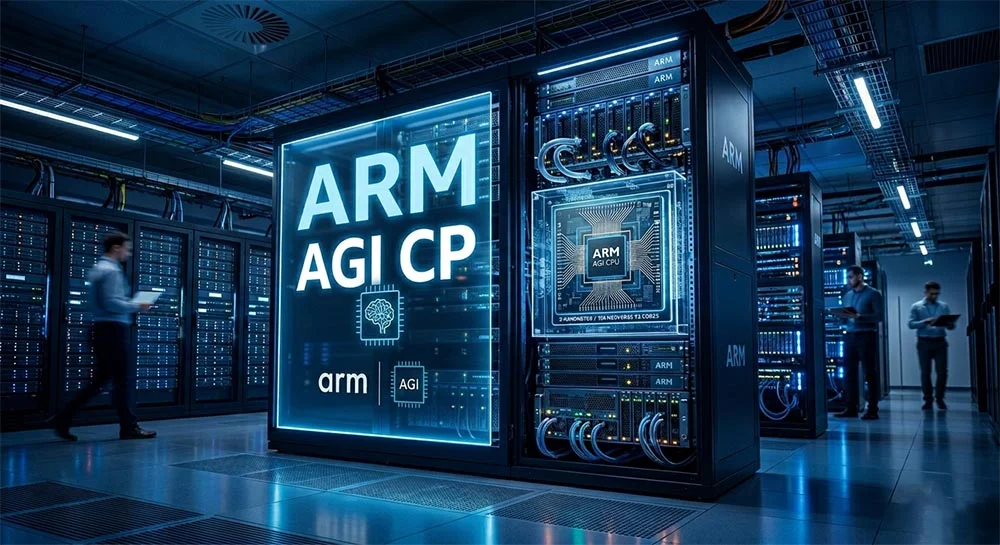
How This Impacts the Future of AI
Arm’s expansion into silicon is more than a business decision—it’s a response to a global shift in computing needs.
🌍 Key Impacts:
- Acceleration of AI Adoption
Businesses can deploy AI faster and more efficiently - Shift in Data Center Design
Infrastructure will be optimized for AI workloads - Reduced Energy Consumption
More sustainable computing at scale - New Competitive Landscape
Traditional chipmakers will face stronger competition
Arm vs x86: The Battle Intensifies
The introduction of Arm-designed silicon brings it into direct competition with established CPU architectures.
Arm Advantages:
- Better power efficiency
- Simpler architecture
- Optimized for AI workloads
x86 Strengths:
- Mature ecosystem
- Strong legacy support
However, as AI becomes the dominant computing force, Arm’s approach may gain a significant edge.
A New Era for Arm
This milestone marks a defining moment in Arm’s history. From powering smartphones to now shaping AI data centers, the company is evolving rapidly.
By entering silicon production, Arm is:
- Expanding its influence across the tech stack
- Enabling faster deployment of AI infrastructure
- Strengthening its position in the global semiconductor race
Conclusion
Arm’s expansion into silicon products with the AGI CPU is a bold and strategic move that could redefine the future of AI computing. As demand for agentic AI continues to surge, the need for efficient, scalable, and high-performance CPUs becomes critical.
With strong industry backing, cutting-edge technology, and a clear vision, Arm is positioning itself at the center of the next wave of AI innovation.
The message is clear: the future of AI infrastructure is being built now—and Arm wants to lead it.
FAQs
1. What is the Arm AGI CPU?
The Arm AGI CPU is a new processor designed specifically for AI data centers, optimized for handling agentic AI workloads efficiently.
2. Why is Arm’s move into silicon important?
It marks the first time Arm is producing its own chips, shifting from a design-only model to full-scale manufacturing, which changes the industry dynamics.
3. How does this affect AI development?
It enables faster, more efficient AI processing, reduces costs, and supports large-scale deployment of AI systems globally.