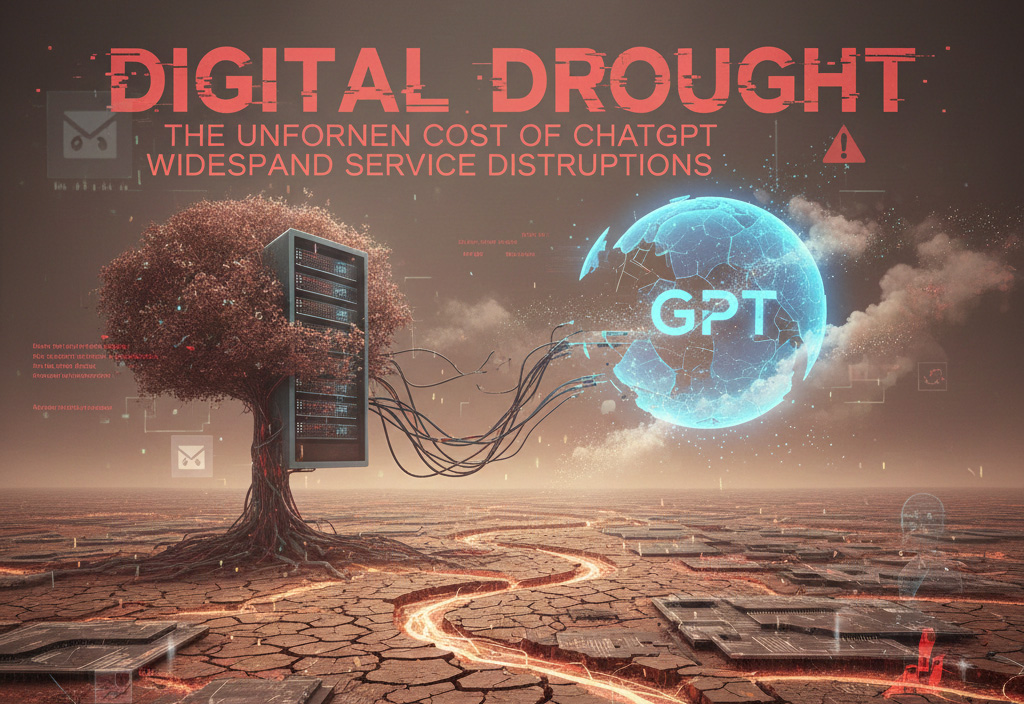
The United States, along with the rest of the world, has been grappling with a new kind of digital panic: the trending question, “Is ChatGPT Down?” Recent, multiple, and prolonged service disruptions to OpenAI’s flagship AI chatbot have thrown a spotlight on the fragility of critical digital infrastructure and the surprising depth of global reliance on generative AI. Unlike past outages that might have been dismissed as mere technical glitches, these recurring failures are sparking a genuine debate over AI dependability, business continuity, and the single points of failure in our increasingly automated lives.
The Unstoppable Trend: Outage Panic
The sheer volume of user reports, spiking consistently on platforms like Downdetector, is what makes the “Is ChatGPT Down” trend unique. In the most recent incidents (such as those observed in early December 2025 and earlier widespread outages), thousands of users across the U.S. and beyond were simultaneously met with unresponsive interfaces, error messages, and abrupt logouts. For many, this wasn’t just a mild inconvenience; it represented an immediate roadblock to their professional workflow.
- Impact on the Workflow: From digital marketers crafting SEO content to software developers debugging code, the sudden silence of the AI companion brings productivity to a screeching halt. The outage in June 2025, lasting over 10 hours, was estimated by some reports to have resulted in millions of lost business hours globally.
- A Systemic Issue: While official statements from OpenAI have sometimes cited specific causes, such as a “routing misconfiguration” or a dependency on an external network like Cloudflare experiencing its own issues, the frequency of these failures—especially after CEO Sam Altman reportedly declared a “code red” to improve platform reliability—suggests deeper infrastructural challenges related to server overload and technical fault tolerance at a massive scale.
The Rise of AI Dependency Anxiety
The trending topic highlights an unprecedented level of dependency on a single AI platform. ChatGPT, and other OpenAI services like the Sora video generator and the API, have become so interwoven with daily commerce and creative processes that their failure is akin to a widespread power or internet blackout.
The user reaction on social media, marked by trending hashtags and a mixture of frustration and self-deprecating humor, reveals a psychological layer to this dependency: AI Dependency Anxiety. Users are not just upset about the lost time; they are expressing a palpable concern over the sudden vulnerability of their entire workflow. This psychological impact is a new phenomenon in the digital era, underscoring how quickly people and businesses have delegated essential cognitive tasks to an external, sometimes unreliable, service.
The Infrastructure Debate: A Call for Redundancy
The intermittent downtime serves as a powerful wake-up call for the broader tech industry and the millions of businesses now relying on AI. When a single infrastructure failure can bring down a platform that serves hundreds of millions of users, the conversation inevitably shifts to resilience, redundancy, and risk mitigation.
- The Competitor Advantage: During major outages, rival platforms like Google’s Gemini and Anthropic’s Claude often continue to operate seamlessly. This stark contrast emphasizes the competitive advantage of robust, decentralized, and highly fault-tolerant data center infrastructure.
- Future of AI Resilience: Experts are now demanding that large AI providers prioritize multi-region redundancy and failover capabilities to ensure continuity. The sheer scale of AI computing requires infrastructure that can handle massive traffic surges and technical failures without affecting millions of global users simultaneously. The stability of the digital backbone is now the non-negotiable prerequisite for the successful integration of AI into global society. The question for businesses is no longer if they should use AI, but how to build workflows that are resilient to the inevitable, if brief, periods when the dominant AI is unreachable.
Frequently Asked Questions (FAQs)
- Q: Why is “Is ChatGPT Down” trending so frequently?
- A: The trend is driven by an increase in frequent service disruptions, often global in scope, coupled with the massive and growing user base (over 300 million weekly active users). When a platform so deeply integrated into daily work fails, the large number of simultaneous reports causes the topic to trend instantly.
- Q: What are the most common issues reported during an outage?
- A: The most common issues include lagging responses, timeouts, the chatbot failing to load, being unexpectedly logged out, and receiving an error message such as “Unusual activity has been detected from your device.”
- Q: How can I check the official status of ChatGPT services?
- A: Users are advised to check the official OpenAI Status page. While third-party sites like Downdetector report user-submitted issues in real-time, the official status page confirms the company’s awareness and provides updates on mitigation efforts.
- Q: Does the outage affect paid ChatGPT Plus subscribers?
- A: Yes, these large-scale outages typically affect both free-tier users and ChatGPT Plus subscribers, indicating a core infrastructure problem rather than a capacity issue isolated to the free service.
- Q: What is the main cause of these recent outages?
- A: Recent incidents have been attributed to issues like a “routing misconfiguration,” server overloads, or dependency on external network services experiencing their own outages. The recurring nature suggests a need for enhanced system resilience at the infrastructure level. Follow on Linkedin
More Blogs: Reflect Media360
- A: Recent incidents have been attributed to issues like a “routing misconfiguration,” server overloads, or dependency on external network services experiencing their own outages. The recurring nature suggests a need for enhanced system resilience at the infrastructure level. Follow on Linkedin